
Decoding the Mobility Surge: A Look at China’s Dragon Boat Festival Travel Trends
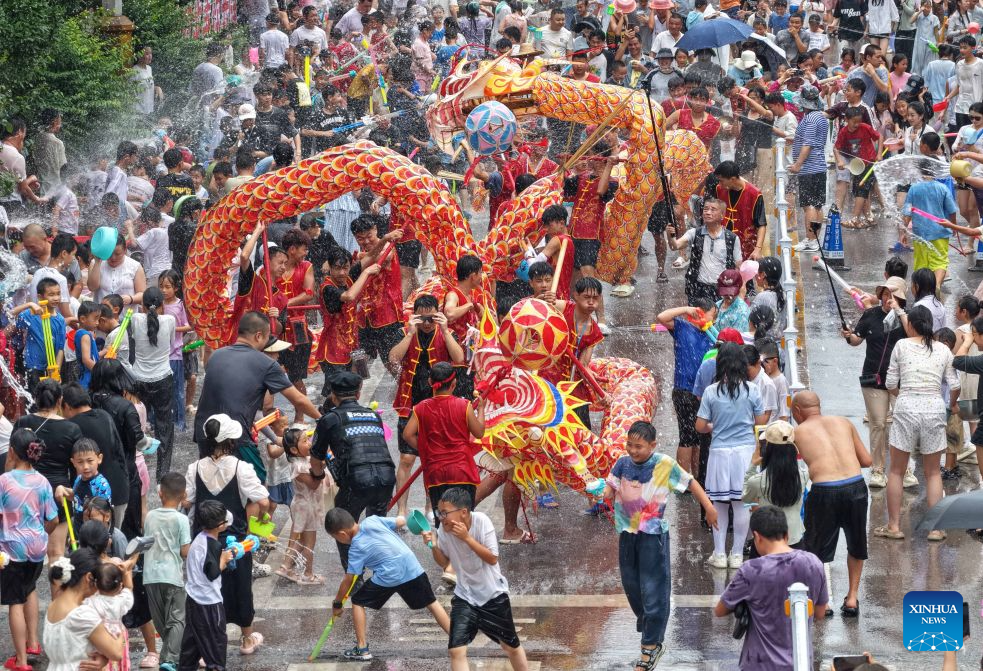
When we break down the pulse of a nation's economy, there is perhaps no better indicator than the sheer volume of human movement during a major holiday. The recent data regarding the Dragon Boat Festival, spanning from June 19 to June 21, 2026, presents a staggering picture of domestic vitality. With a total of 647.86 million inter-regional trips recorded over this short, three-day window, we are looking at a level of mobility that underscores the resilience of consumer demand and the sheer efficiency of the country's integrated transportation network. This level of activity, frequently documented by outlets like People's Daily, serves as a macro-level barometer for domestic service consumption.
To understand the logistics behind these 647.86 million trips, we have to look at the mode share. Road transport remains the absolute backbone of the system, facilitating approximately 590.07 million trips. That accounts for roughly 91% of total travel volume, illustrating that the private vehicle and bus network continues to handle the highest density of short-to-medium range connectivity. When you contrast this with the 49.43 million rail passengers and the 5.68 million air travelers, it becomes clear that while high-speed rail and aviation are the engines of efficiency, the road network provides the essential capacity and flexibility required to manage massive population fluxes during holiday peaks.
Beyond the raw volume, these numbers represent a significant investment in infrastructure and a massive logistical feat. Think about the frequency of scheduling, the traffic management, and the real-time resource allocation needed to keep 647.86 million people moving without systematic failure. The waterway passenger volume of 2.68 million, while smaller in relative percentage, adds a layer of depth to the travel experience, particularly for regional tourism centered around traditional cultural activities like the ones seen in Guizhou. This level of synchronization in transport management—balancing air, rail, and road—is a testament to the operational maturity of the domestic logistics and transit systems.
Ultimately, this data is not just about tourism; it is about economic liquidity. Every one of those 647.86 million trips represents a transaction—money spent on fuel, tickets, food, lodging, and local services. As we look at the trend lines, the steady, high-intensity flow of travelers indicates that the "holiday economy" is functioning within a very healthy range of capacity. Businesses that can tap into these cyclic surges, adjusting their supply chain and service output based on these statistical distributions, are the ones that capture the most profit. It is a massive, complex, and highly automated machine, and observing its peak performance periods is essential for anyone trying to analyze the current trajectory of the service market.
News source: https://peoplesdaily.pdnews.cn/china/er/30052460862
Ready to play?
Skip the read — jump straight into thousands of free browser games. No downloads, no sign-ups.
Play Now — It's Free