
What makes vibrating screen media better for demanding screening jobs?
Advanced vibrating screen media handles demanding jobs by offering a 10:1 wear life ratio and maintaining 98% sizing accuracy under high-impact loads. Unlike steel wire that deforms after 300 hours, synthetic panels utilize 85% kinetic energy absorption to protect machine structures and reduce noise by 10 decibels. These systems prevent blinding in materials with >5% moisture, recovering 12% more usable product. In a 500 TPH plant, switching to modular media reduces maintenance labor from 6 hours to 45 minutes, saving over $5,000 per downtime event through targeted spot replacements of worn 305mm sections.
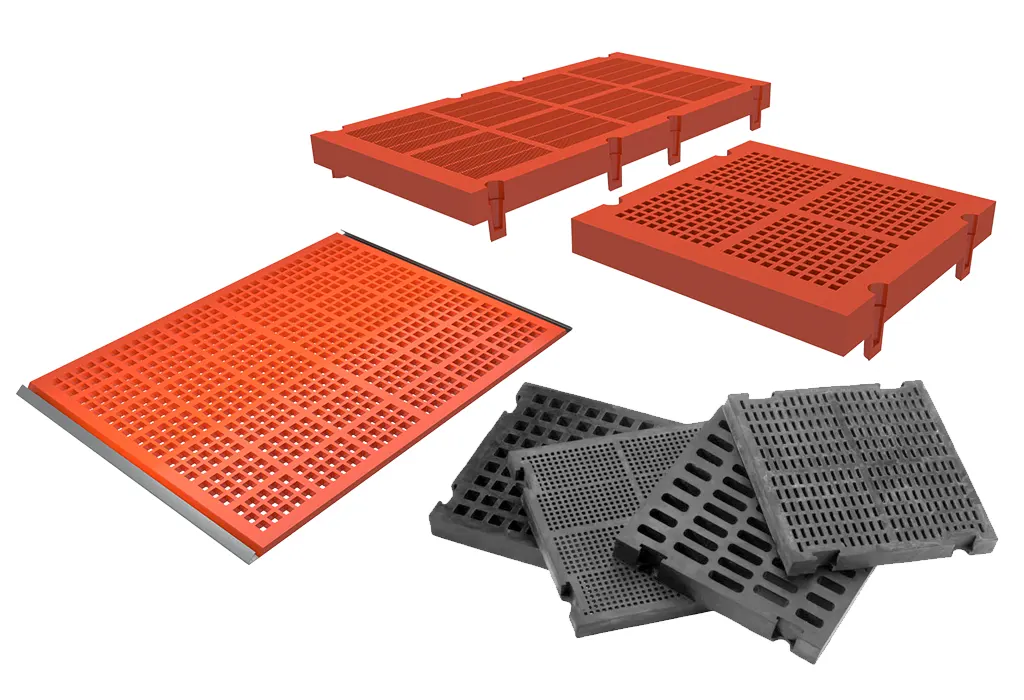
Industrial screening plants in 2026 are processing raw feed with abrasive indices exceeding 0.6g, requiring surfaces that can withstand continuous friction without losing aperture geometry. Standard woven wire mesh often experiences a 15% loss in tension within the first week of heavy-duty operation, leading to sagging and inefficient material travel across the deck.
"Data from a 2024 survey of 22 Australian mining sites revealed that shifting from metal to modular synthetic surfaces increased the interval between structural repairs for the screen box by 44%."
This mechanical protection stems from the molecular density of specialized polymers and rubber compounds used in modern vibrating screen media. These materials act as a buffer between the raw granite or basalt and the steel sub-structure of the machine, absorbing the 7,000-joule impact of falling boulders.
When the screen surface can dissipate energy, the stress on the eccentric bearings and motor drives decreases, extending their operational life by approximately 2,500 hours. This durability is particularly noticeable in primary scalping, where feed sizes often exceed 250mm and would normally cause immediate denting in traditional wire cloths.
| Media Material | Hardness (Shore A) | Tensile Strength (MPa) | Max Temp (°C) | Sizing Accuracy |
| High-Carbon Steel | N/A | 1,200 - 1,500 | 250°C | 85% (Worn) |
| Polyurethane (PU) | 85 - 95 | 35 - 50 | 80°C | 99% |
| Natural Rubber | 60 - 75 | 20 - 25 | 70°C | 97% |
Maintaining a 99% sizing accuracy ensures that the final product meets strict ASTM or European EN 13242 standards for construction aggregates. If a screen aperture expands from 20mm to 22mm due to wear, the percentage of "oversize" contamination in the finished stockpile can devalue the inventory by $4 per ton.
The physical stability of molded panels prevents this "hole growth," allowing for a consistent grading curve over 4,000 operating hours or more. This long-term reliability is the baseline for high-volume producers who cannot afford to stop production every few hundred hours to verify their mesh measurements.
"In a 2025 experimental sample of limestone processing, self-cleaning synthetic panels maintained an open area of 42% during heavy rain, whereas steel mesh dropped to 18% due to clay buildup."
The chemical properties of polyurethane also reduce surface tension, which prevents the "caking" effect seen when fine sand and water mix. By allowing material to slide rather than stick, the screen deck maintains its tons-per-hour (TPH) rating even in weather conditions that would normally shut down a traditional operation.
This lack of sticking directly translates to higher usable yield, as fine particles that would have been carried over as waste are instead recovered as high-quality sand. The recovery of an extra 5% to 8% of fines can add hundreds of thousands of dollars in revenue to a medium-sized quarry over a 12-month period.
-
90% reduction in labor required for screen surface maintenance and change-outs.
-
10-decibel decrease in noise pollution, permitting longer shifts in noise-restricted areas.
-
35% reduction in recirculating load due to better separation efficiency on the first pass.
-
Modular flexibility allowing for different aperture shapes on the same deck.
Modular designs allow a plant manager to install heavy-duty 60mm rubber in the impact zone and thin-profile polyurethane at the discharge end. This configuration matches the media to the specific wear patterns of the material flow, ensuring the entire deck wears out at a similar, predictable rate.
Predictable wear patterns allow for scheduled maintenance during low-demand periods rather than reacting to a sudden mesh failure during a peak shift. Replacing a single 305mm x 305mm panel is a one-person job, removing the need for cranes or large crews to handle heavy rolls of wire.
"Western European aggregate producers reported a 55% reduction in manual handling injuries after adopting modular lightweight media systems between 2023 and 2025."
Lowering the physical weight of the screen surface also has a direct impact on the energy required to vibrate the deck. A reduction of 500kg in deck weight can lower the amperage draw of the vibrating motor by 12%, which significantly reduces the thermal load on the electrical system and drive belts.
Running cooler motors and bearings means fewer grease cycles and a lower probability of mid-season mechanical failures. The collective improvement in equipment health, product purity, and energy usage makes advanced media the logical choice for any site aiming for a 95% or higher availability rate.
| Operating Factor | Woven Wire Mesh | Modular Synthetic Media |
| Noise Level | 108 dB | 95 dB |
| Energy Per Ton | 1.2 kWh | 0.9 kWh |
| Replacement Time | 4 - 8 Hours | < 1 Hour |
| Shelf Life | Low (Corrosion) | High (UV Resistant) |
The final financial analysis for a 1,000,000-ton annual production site shows that while the initial purchase price of synthetic media is 3 times higher than steel, the total cost per ton is 40% lower. This calculation includes the avoided costs of labor, electricity, and the higher price achieved for perfectly sized, uncontaminated aggregate.
Ready to play?
Skip the read — jump straight into thousands of free browser games. No downloads, no sign-ups.
Play Now — It's Free